
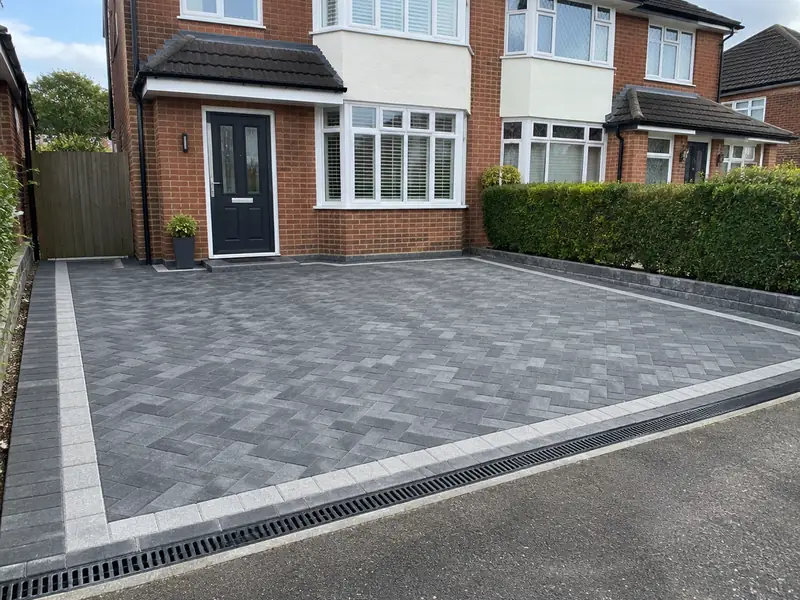
A new driveway is a hard-wearing surface for parking, such as block paving, resin bound gravel, tarmac or gravel, laid on an excavated and compacted sub-base with edging and drainage designed to carry vehicle loads and handle rainwater.
For a homeowner in Glenrothes, planning a new driveway tends to begin with two questions: what will it cost, and how disruptive will it be? Our guide range is £3,800–£8,600 including VAT, and a typical job runs to 3–7 days on site. Both numbers firm up once we have seen the property, measured up and agreed exactly what is included.
- Guide price
- £3,800–£8,600 inc VAT
- Time on site
- 3–7 days on site
- Postcodes
- KY6 and KY7
- Planning rules
- Scotland
- Local area
- Fife
- Survey
- Free, with a written quote
How much does a new driveway cost in Glenrothes?
Here is how the guide price for a new driveway breaks down in Glenrothes. We start from national figures and adjust for Scotland, which comes out about 4% below the national guide. The resulting range, VAT included, is £3,800–£8,600, and a survey, at no cost to you, firms it up.
| Type of job | What it usually involves | Guide in Glenrothes |
|---|---|---|
| Gravel or tarmac | A typical 40–50m² drive in gravel on a grid, or tarmac with block edging. | £1,900–£4,800 |
| Block paving or resin bound | A typical 40–50m² drive with sub-base, edging and drainage. | £3,800–£8,600 |
| Large or premium driveway | Larger drives, natural stone, walls, steps or a new dropped kerb. | £7,700–£15,500 |
Expect these to shape the final quote:
- Driveway area and the depth of excavation needed
- Surface: gravel, tarmac, block paving, resin or stone
- Edging, steps, walls and manhole adjustments
- Access for machinery and removal of spoil
What’s included?
- Survey of levels, drainage, manholes and access
- Excavation and removal of the old surface and soil
- Weed membrane and compacted MOT Type 1 sub-base
- Edging kerbs or restraints to hold the surface in place
- Drainage channels or soakaway where needed
- Site cleared and waste removed
Local housing and a new driveway
Fife's East Neuk fishing villages are known for pantiled roofs and crow-stepped gables, and St Andrews has historic stone streets. Kirkcaldy and Dunfermline have Victorian sandstone housing and interwar estates, Glenrothes was built as a post-war new town, and former mining towns in central Fife have rows of cottages and post-war council housing.
The coast faces cold easterly winds and salt from the North Sea, and frost is common inland through the winter.
So when we survey a Glenrothes property for a new driveway, the first step is working out how it was built and what has been changed since.
Permissions for a new driveway in Glenrothes
Homes in Glenrothes come under the regulations for Scotland, summarised below. We don't rely on general rules alone: we confirm the position for your address with the council before a quote goes out.
In Scotland, a hard surface in front of a house is usually permitted development if it is permeable or drains within the property. A dropped kerb or road opening needs consent from the council as roads authority.
A building warrant is not normally needed for a driveway.
Rules change and every property is different, so we check the planning history and constraints for your address before we quote.
What happens after you get in touch?
Free site survey
We arrange a free site survey on a date convenient to you. We measure up, look at the existing structure and access, and discuss your plans for a new driveway so the price reflects your home.
Quote in writing
After the survey we send a quote for a new driveway that fixes the price for the scope we've agreed. If you want to change materials or scope, we revise it in writing before anything is booked.
Booking the work
We handle the paperwork side: checking whether planning permission or building control approval is needed, submitting applications where they are, and scheduling the trades and materials around your dates.
Finish and handover
Our trades complete a new driveway while your point of contact keeps you updated. When everything is finished, we clear the site, take away waste and go through the result with you before handover.
What you can expect from us
Frequently asked questions
Is the price fixed?
Yes, for the specification we agree. Your written quote sets out exactly what is included at a fixed price. It only changes if you ask for something different, or if a problem the survey could not reasonably reveal later needs extra work. In either case we explain the change and confirm it in writing before going ahead.
Which driveway surface is easiest to maintain?
Resin bound gravel is one of the easiest surfaces to maintain, because it is smooth, porous and resists weeds, needing only an occasional sweep and wash. Block paving needs re-sanding joints and occasional weed control. Tarmac needs little upkeep but can soften in heat. Gravel needs raking and topping up. We explain the upkeep of each surface before you choose.
Can I stay at home during the work?
In most cases, yes. Most people can live at home throughout, and we plan the work to keep disruption down by protecting floors, agreeing working hours and keeping access routes clear. Bigger jobs affecting kitchens, bathrooms or heating may mean a short spell with reduced facilities, and we talk this through with you at the survey.
What is a sub-base and why does it matter?
The sub-base is the layer of crushed, compacted stone beneath the driveway surface that spreads the weight of vehicles into the ground. Most driveway failures, such as sinking, rutting and loose blocks, come from a sub-base that is too thin or poorly compacted. We excavate to the right depth for your soil and compact the sub-base in layers before laying the surface.
How long does it take to lay a driveway?
Laying a typical driveway takes around three to seven days, depending on size, surface and ground conditions. Excavation and sub-base usually take the first few days, then edging, drainage and the surface. Resin needs dry weather and time to cure, and you will usually need to keep cars off for a short period afterwards. We confirm timings and access arrangements with your quote.
Also covering areas around Glenrothes
Live in Glenrothes? Our coverage takes in the KY6 and KY7 postcode areas and reaches out to Kirkcaldy, Dunfermline and Edinburgh, so homes on the outskirts and in the next town along are included.