
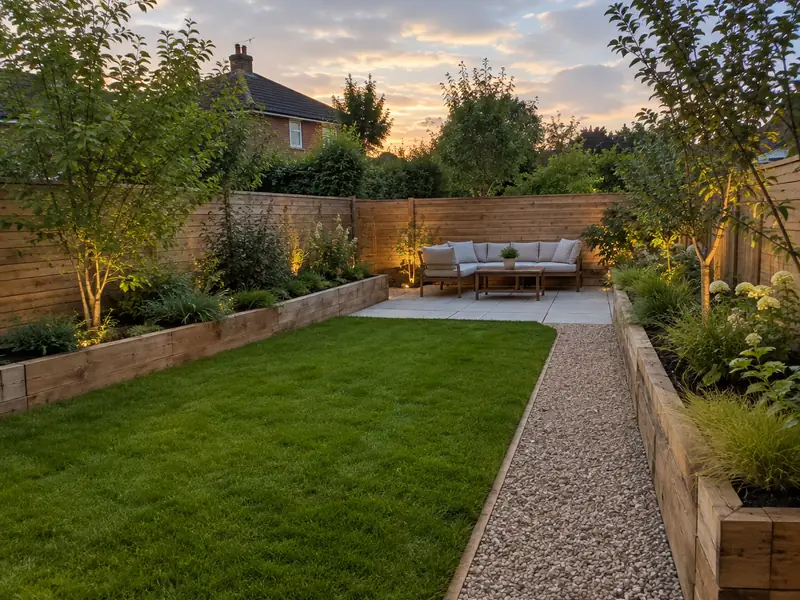
Garden landscaping is designing and building an outdoor space as a whole, combining hard landscaping such as patios, paths, walls and steps with soft landscaping such as lawns, planting and beds, plus drainage and lighting, so the garden works for how you live.
Across East Sussex, people look into garden landscaping to replace something worn out, to make the house work better for them, or to get it ready for a sale. We cover Brighton, Eastbourne, Hastings and Hove and the smaller towns around them, working to the rules that apply in England. Expect a guide of £6,700–£17,000, VAT included, in the South East, and every quote follows a free visit.
- Guide price
- £6,700–£17,000 inc VAT
- Time on site
- 1–4 weeks on site, depending on scope
- Planning rules
- England
- Price level
- About 12% above the national guide
- Towns listed
- 12
- Survey
- Free, with a written quote
Garden landscaping prices in East Sussex
The table below shows guide prices for garden landscaping in East Sussex. They are based on rates in the South East, which run about 12% above the national guide, giving an overall range of £6,700–£17,000. All figures include VAT and are firmed up after a free site survey.
| Type of job | What it usually involves | Guide in East Sussex |
|---|---|---|
| Garden refresh | Clearance, new turf, edging, bark or gravel and some planting. | £1,700–£5,600 |
| Typical garden makeover | A new patio, lawn, borders, paths and planting in a typical rear garden. | £6,700–£17,000 |
| Full redesign | Levels, retaining walls, large patios, lighting and drainage for larger or sloping gardens. | £17,000–£39,000 |
What moves the price up or down:
- Garden size, access and the amount of clearance needed
- Ratio of hard landscaping to lawn and planting
- Drainage, soil quality and ground conditions
- Materials chosen for paving, walls and features
What do you get?
- Survey of size, levels, soil, drainage and access
- Site clearance and removal of old features and waste
- Groundworks, levelling and drainage
- Patios, paths, steps and edging laid on proper bases
- Turf or artificial grass laid on a prepared base
- Planting, bark or gravel finishing and outdoor lighting where included
Homes in East Sussex
Brighton and Hove are known for Regency stucco terraces and bow-fronted houses, alongside Victorian terraces climbing the hills. Lewes and Brighton have mathematical tiles and flint walls, Eastbourne has large Victorian and Edwardian villas, and Wealden villages use tile-hanging, weatherboarding and timber frames. Interwar suburbs and newer estates fill out most towns.
Regency and Victorian houses often need sash-style windows, stucco or render repair and careful decorating. Hillside terraces suit loft conversions, and flint or brick walls commonly need repointing in lime mortar.
Seafront homes face salt-laden south-westerly winds and driving rain, while Wealden clay can shrink and swell, affecting extension foundations.
Do you need permission in East Sussex?
The notes below cover England, which is where East Sussex sits. Rules change and every property is different, so we speak to the council before pricing your job.
Most garden landscaping in England needs no planning permission. Trees protected by a Tree Preservation Order, or trees in a conservation area, need the council’s consent or notice before work; outbuildings and raised platforms have their own limits.
Building Regulations rarely apply to landscaping, though new drainage and garden electrics must comply.
Rules change and every property is different, so we check the planning history and constraints for your address before we quote.
The four stages
Free site survey
First, someone visits your home in East Sussex to see the space, take measurements and note anything that could affect the work, such as access or the condition of what is there. There is no charge for this visit.
Quote in writing
We put everything into a written, fixed-price quote: the specification, what's excluded, staged payments and the expected time on site. Take whatever time you need to decide; there's no pressure to commit.
Plan and prepare
Before anyone starts, we confirm the programme in writing, check whether consents are required and arrange deliveries. If a skip or scaffolding on the road needs a permit, we apply for it.
On site to finish
The job proceeds in the order set out in the programme, with dust and debris kept under control. Finally we tidy away, inspect the work together and pass the finished project over to you with its paperwork.
How we work
Frequently asked questions
How can I make my garden low maintenance?
A low-maintenance garden reduces mowing, weeding and watering. Paving or porcelain patios, gravel areas on a weed membrane, artificial grass and raised beds with hardy, slow-growing plants all help. Mulching borders with bark suppresses weeds and holds moisture. Some planting keeps the space feeling green and supports wildlife. We balance hard and soft areas to suit the time you want to spend.
Is the price fixed?
Yes, for the specification we agree. Your written quote sets out exactly what is included at a fixed price. It only changes if you ask for something different, or if a problem the survey could not reasonably reveal later needs extra work. In either case we explain the change and confirm it in writing before going ahead.
Can I stay at home during the work?
In most cases, yes. Most people can live at home throughout, and we plan the work to keep disruption down by protecting floors, agreeing working hours and keeping access routes clear. Bigger jobs affecting kitchens, bathrooms or heating may mean a short spell with reduced facilities, and we talk this through with you at the survey.
Can you work around existing trees and plants?
We can design around trees and plants you want to keep, protecting their roots from digging and machinery and keeping levels unchanged near trunks. Some trees are protected by tree preservation orders or conservation area rules, which require permission before cutting or significant root work. We note any trees and plants you want to keep at the survey.
What can be done about a waterlogged garden?
A waterlogged garden is usually caused by heavy clay soil, compacted ground or water running off from hard surfaces. Solutions include French drains, soakaways, improving soil with organic matter, and making new paving permeable or directing its run-off to drains. Raised beds help plants in wet areas. We look at the cause during the survey and include drainage in the design.
Towns in East Sussex
Our coverage for garden landscaping in East Sussex includes the towns listed here. Each page explains guide costs, typical timings and the neighbouring places we also serve.