
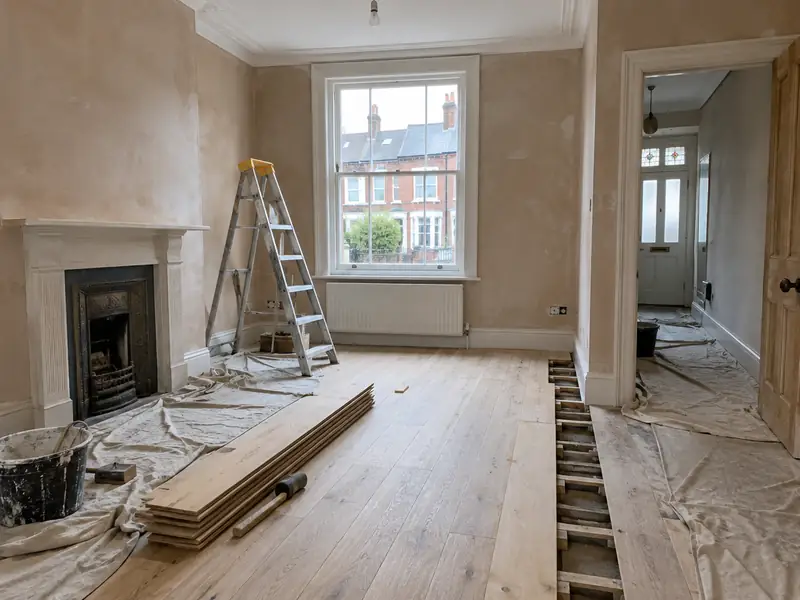
A whole-house renovation is a planned refurbishment of an entire home, typically combining rewiring, heating, plastering, new kitchen and bathroom, flooring and decoration, and sometimes layout changes, carried out in a logical order under one project.
Planning a whole-house renovation for a home in March means making a handful of decisions about materials, layout, finish and timing. We help you work through them at a free survey, then confirm in writing what it will cost for the options you pick. Most projects of this type need 8–24 weeks on site, depending on scope, and we cover every PE15 address as well as the rest of Cambridgeshire.
- Guide price
- £47,000–£126,000 inc VAT
- Time on site
- 8–24 weeks on site, depending on scope
- Postcodes
- PE15
- Planning rules
- England
- Local area
- Cambridgeshire
- Survey
- Free, with a written quote
What should you budget for a whole-house renovation in March?
Use the table to gauge the cost of a whole-house renovation in March before we visit. Figures include VAT and are scaled for the East of England, coming out about 5% above the national guide, which gives £47,000–£126,000 overall. After a free survey, you receive a fixed written price.
| Type of job | What it usually involves | Guide in March |
|---|---|---|
| Light refurbishment | Decoration, flooring, minor repairs and perhaps one new kitchen or bathroom. | £16,000–£47,000 |
| Full refurbishment | Rewire, heating, plastering, new kitchen and bathroom, flooring and decoration throughout a 3-bed house. | £47,000–£126,000 |
| Renovation with structural changes | A full refurbishment plus wall removal, layout changes or extra bathrooms. | £105,000–£189,000 |
The main things that change the figure:
- Size of the house and number of rooms being renovated
- Whether rewiring, new heating and full replastering are needed
- Structural or layout changes and associated approvals
- Hidden problems such as damp, rot or outdated drainage
What do you get?
- Room-by-room survey and a planned order of works
- Strip-out of old kitchens, bathrooms, flooring and finishes
- Heating and plumbing upgrades by qualified engineers
- Plastering, skimming and repairs to ceilings and walls
- Flooring, internal doors, skirting and joinery
- Decoration and a final clean before handover
What are homes like around March?
Cambridge has many Victorian terraces in pale gault brick, with Edwardian villas and modern estates around the city. Peterborough expanded as a new town from the 1970s, adding large planned estates, while Ely, Huntingdon, St Neots and the Fenland market towns keep Georgian and Victorian centres. Limestone appears in villages near the Northamptonshire border.
Narrow terraces commonly suit loft conversions and kitchen extensions. Newer estate homes often need garage conversions, porches and landscaping, and older brick and stone buildings may call for lime-based repointing and carefully specified windows.
Whatever era your March home dates from, we plan a whole-house renovation around how it is actually built rather than a one-size-fits-all specification.
Planning and building rules in March
Planning law differs across the UK. For a home in March, it is the England rules below that count, and we check them with the council ahead of any quote.
Internal work such as a new kitchen, bathroom, flooring, plastering or decorating does not need planning permission in England, unless the house is listed, when listed building consent may be needed even for internal changes.
Some internal work is covered by Building Regulations: new electrical circuits and work in bathrooms (Part P), new drainage, structural changes, extractor ventilation and any new window. Notifiable work is certified by a registered installer or by building control.
Rules change and every property is different, so we check the planning history and constraints for your address before we quote.
The four stages
Free site survey
A free survey comes first. It gives us what we need to price a whole-house renovation properly, including dimensions, existing materials and access for deliveries, and gives you the chance to ask anything you like.
Price and scope agreed
After the survey we send a quote for a whole-house renovation that fixes the price for the scope we've agreed. If you want to change materials or scope, we revise it in writing before anything is booked.
Booking the work
Before anyone starts, we confirm the programme in writing, check whether consents are required and arrange deliveries. If a skip or scaffolding on the road needs a permit, we apply for it.
Build and hand over
Work goes ahead as scheduled and you deal with one contact throughout. When the last trade leaves, we clear and clean the site, talk you through what has been done and pass on any certificates and care instructions.
What you can expect from us
Frequently asked questions
Do I need planning permission in March?
It depends on the work, the size of the project, your property type and whether the building is listed or in a conservation area. March is in England, so England's rules apply. Many smaller jobs need no planning application, but some still need building control approval. We check what applies to your address before quoting.
How long will a whole-house renovation take?
On a typical home, allow 8–24 weeks on site, depending on scope. Larger projects, older buildings and extra work found once things are opened up can extend that, while simpler jobs may be shorter. Your quote includes an estimate of time on site, and your point of contact keeps you updated on the programme as the work progresses.
Can we live in the house while it is renovated?
Living in a house during a full renovation is possible but hard, especially while rewiring, plastering and the kitchen and bathroom are being done. Many people move out for the noisiest weeks or stay elsewhere for the whole project. If you stay, we can phase the work room by room and keep one bathroom and a basic kitchen working for as long as possible. We discuss this at the survey.
How long does a full house renovation take?
A full renovation of a typical 3-bed house usually takes around 8–16 weeks on site, and longer if there are structural changes or extensive repairs. A light refresh may take only a few weeks. Material lead times for kitchens, windows and bathroom fittings also affect the programme. We give you a week-by-week plan with your quote and update it as the work progresses.
Do I need planning permission to renovate?
Most internal renovation work does not need planning permission, but it depends on what changes, your home's location, whether it is listed or in a conservation area, and which UK nation you are in. Listed buildings usually need consent for internal and external changes. Altering windows, adding dormers or changing the outside appearance in a conservation area may also need permission. We check before quoting.
Near March
We cover every part of March, including PE15, and nearby Wisbech, Ely and Peterborough. Wherever you are within that patch, the survey is free and the quote comes to you in writing.