
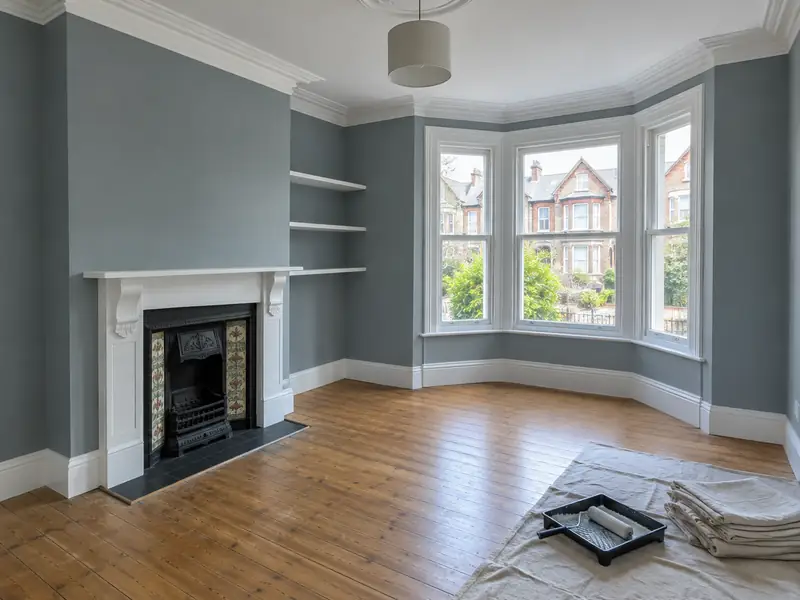
Painting and decorating is preparing and finishing the surfaces of a home, including filling, sanding, priming and painting walls, ceilings and woodwork, hanging wallpaper and painting exterior walls and joinery, to protect them and refresh how rooms look.
Thinking about painting and decorating in Harwich? We take charge of the whole project, co-ordinating every trade involved, and one person keeps you updated. Guide prices for the East of England sit at £1,250–£3,200 including VAT, and a typical job takes 1–2 days per room; 3–7 days for a house exterior. Your own figure depends on what the survey finds and the specification you settle on.
- Guide price
- £1,250–£3,200 inc VAT
- Time on site
- 1–2 days per room; 3–7 days for a house exterior
- Postcodes
- CO12
- Planning rules
- England
- Local area
- Essex
- Survey
- Free, with a written quote
Painting and decorating prices in Harwich
These are guide costs, not quotes. For painting and decorating in Harwich the range is £1,250–£3,200, VAT included, reflecting prices in the East of England that are about 5% above the national guide. Once we have visited for a free survey, you get a firm figure for the scope you approve.
| Type of job | What it usually involves | Guide in Harwich |
|---|---|---|
| Single room | Walls, ceiling and woodwork in one average bedroom or living room. | £350–£950 |
| House exterior | Masonry and joinery on a typical semi, including access equipment. | £2,600–£6,300 |
| Whole interior of a 3-bed house | Every room, hallway, stairs and landing, including woodwork. | £3,200–£6,800 |
What moves the price up or down:
- Amount of preparation, filling and repairs needed
- Whether woodwork, doors and wallpaper are included
- Paint quality, colour changes and number of coats
- Exterior access, scaffolding and the condition of surfaces
Scope of the work
- Survey of each surface and agreed colours and finishes
- Floors, furniture and fittings protected with dust sheets and masking
- Mist coat on new plaster before finishing coats
- Two finishing coats to walls and ceilings as standard
- Woodwork sanded, primed where bare, and painted
- Furniture replaced, waste removed and a final tidy-up
Local housing and painting and decorating
Essex ranges from timber-framed and weatherboarded cottages in the north, some with decorative pargeting, to Victorian terraces in Colchester, Chelmsford and Southend. Basildon and Harlow were built as post-war new towns, much of the south-east has interwar suburbs and bungalows, and large new estates continue to appear around Chelmsford and Braintree.
Terraces and semis commonly suit loft conversions and rear extensions, and many bungalows can take a loft room. New-town homes often need cladding, window and roofline renewal, while timber-framed cottages call for lime plaster and repairs that respect the original frame.
These patterns matter for painting and decorating: older walls, roofs and floors in Harwich can need different materials or extra preparation compared with newer homes.
Do you need permission in Harwich?
Which rules apply depends on where you live. For Harwich, the answer is England, and the points below reflect that; we verify them with the council before quoting.
Internal work such as a new kitchen, bathroom, flooring, plastering or decorating does not need planning permission in England, unless the house is listed, when listed building consent may be needed even for internal changes.
Some internal work is covered by Building Regulations: new electrical circuits and work in bathrooms (Part P), new drainage, structural changes, extractor ventilation and any new window. Notifiable work is certified by a registered installer or by building control.
Rules change and every property is different, so we check the planning history and constraints for your address before we quote.
The four stages
Free site survey
First, someone visits your home in Harwich to see the space, take measurements and note anything that could affect the work, such as access or the condition of what is there. There is no charge for this visit.
Written quote
Next you receive a written quote with a fixed price for the agreed specification. It lists what is included, what is not, and how payments are staged, so you can compare it properly.
Getting ready
With the quote agreed, we book the work in and handle preparation: permissions where needed, building control notifications, material orders and access arrangements for your Harwich property.
Finish and handover
During the work we protect the areas around it and tidy up at the end of each day. Once complete, we check the finish, remove our materials and hand over paperwork such as building control sign-off where it applies.
Why homeowners choose us
Painting and decorating in Harwich: questions
When is the right time to paint the outside of a house?
Exterior painting needs dry weather and mild temperatures, so late spring to early autumn is usually the right time. Paint should not be applied to damp surfaces, in rain or frost, or in strong direct sun. Surfaces need time to dry out after rain before work starts. We plan exterior work around the forecast and pause if conditions turn.
Is the price fixed?
Yes, for the specification we agree. Your written quote sets out exactly what is included at a fixed price. It only changes if you ask for something different, or if a problem the survey could not reasonably reveal later needs extra work. In either case we explain the change and confirm it in writing before going ahead.
Can you combine painting and decorating with other work?
Yes. Because we manage several trades under one contract, we can plan painting and decorating alongside other work on your Harwich home, such as new windows with rendering, or a kitchen refit with an extension. Combining jobs can reduce repeat set-up such as scaffolding, skips and access, and every element is listed and priced in the same written quote.
How long does it take to decorate a room?
Decorating an average room usually takes one to two days, allowing time for preparation, a mist coat or primer where needed and two finishing coats. Hallways, stairs and landings take longer because of the height and the amount of woodwork. Wallpapering adds time for stripping and lining. We give you a schedule so you know which rooms will be out of use and when.
How often should exterior woodwork be repainted?
Exterior woodwork, such as timber windows, doors and fascias, usually needs repainting every five to eight years, depending on exposure, paint quality and how well it was prepared. South-facing and coastal elevations wear faster. Look out for flaking, cracking or bare patches, which let water into the timber. Repainting before rot sets in costs far less than replacing joinery.
Near Harwich
Addresses in CO12 are all covered for Harwich, along with Felixstowe, Ipswich and Clacton-on-Sea close by. Give us your postcode when you get in touch and we will confirm the details.