
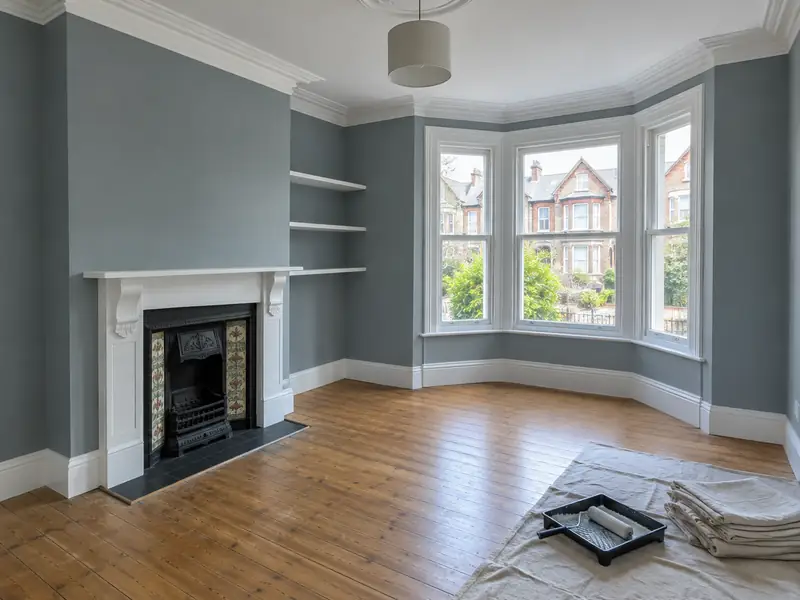
Painting and decorating is preparing and finishing the surfaces of a home, including filling, sanding, priming and painting walls, ceilings and woodwork, hanging wallpaper and painting exterior walls and joinery, to protect them and refresh how rooms look.
Addresses across E1, E3, E14 and E1W fall within our coverage for painting and decorating, so if your home is in Canary Wharf we can arrange a survey on a day that works for you. We inspect the existing building, discuss materials and layout, and then price the agreed specification in writing. Expect a guide range of £1,550–£3,900 including VAT before that visit.
- Guide price
- £1,550–£3,900 inc VAT
- Time on site
- 1–2 days per room; 3–7 days for a house exterior
- Postcodes
- E1, E3, E14, E1W and SE8
- Planning rules
- England
- Local area
- Greater London
- Survey
- Free, with a written quote
How much does painting and decorating cost in Canary Wharf?
Budgeting for painting and decorating in Canary Wharf? The numbers below include VAT and are adjusted for London, where costs are about 30% above the national guide. The headline range is £1,550–£3,900. Nothing is final until we have measured up at a free survey and agreed the specification with you.
| Type of job | What it usually involves | Guide in Canary Wharf |
|---|---|---|
| Single room | Walls, ceiling and woodwork in one average bedroom or living room. | £450–£1,150 |
| House exterior | Masonry and joinery on a typical semi, including access equipment. | £3,200–£7,800 |
| Whole interior of a 3-bed house | Every room, hallway, stairs and landing, including woodwork. | £3,900–£8,400 |
Expect these to shape the final quote:
- Number and size of rooms, including ceiling height
- Amount of preparation, filling and repairs needed
- Whether woodwork, doors and wallpaper are included
- Exterior access, scaffolding and the condition of surfaces
Scope of the work
- Floors, furniture and fittings protected with dust sheets and masking
- Filling cracks and holes, sanding and spot priming
- Mist coat on new plaster before finishing coats
- Two finishing coats to walls and ceilings as standard
- Wallpaper stripped or hung where included
- Furniture replaced, waste removed and a final tidy-up
Building in Canary Wharf
London's housing is dominated by Victorian and Edwardian terraces, often in yellow London stock brick, with Georgian terraces in central districts and mansion blocks across many inner areas. Outer boroughs have large belts of interwar semis, and there are extensive post-war council estates. Many houses have been split into flats, and conservation areas are widespread.
Terraces suit side-return extensions and rear dormer loft conversions; interwar semis commonly take hip-to-gable lofts. Shared party walls, restricted parking and conservation rules often shape the plans and the programme.
In Canary Wharf, as elsewhere in London, we take the building's age and construction into account before recommending anything, because both can change what is involved in painting and decorating.
Permissions for painting and decorating in Canary Wharf
Because Canary Wharf falls under England's rules, the guidance below is the version relevant to you. Before sending a price, we check your property's position with the council.
Internal work such as a new kitchen, bathroom, flooring, plastering or decorating does not need planning permission in England, unless the house is listed, when listed building consent may be needed even for internal changes.
Some internal work is covered by Building Regulations: new electrical circuits and work in bathrooms (Part P), new drainage, structural changes, extractor ventilation and any new window. Notifiable work is certified by a registered installer or by building control.
Rules change and every property is different, so we check the planning history and constraints for your address before we quote.
From survey to handover
We look at the job
A free survey comes first. It gives us what we need to price painting and decorating properly, including dimensions, existing materials and access for deliveries, and gives you the chance to ask anything you like.
Price and scope agreed
You get the price in writing, itemised so you can see where the money goes. As long as the specification stays the same, that is the price you pay for painting and decorating.
Getting ready
We handle the paperwork side: checking whether planning permission or building control approval is needed, submitting applications where they are, and scheduling the trades and materials around your dates.
On site to finish
The work is carried out to the agreed specification, with floors and furniture protected and the site kept tidy. At the end we clean up, walk through the finished job with you and hand over any certificates.
How we work
Frequently asked questions
Can I stay at home during the work?
In most cases, yes. Most people can live at home throughout, and we plan the work to keep disruption down by protecting floors, agreeing working hours and keeping access routes clear. Bigger jobs affecting kitchens, bathrooms or heating may mean a short spell with reduced facilities, and we talk this through with you at the survey.
When is the right time to paint the outside of a house?
Exterior painting needs dry weather and mild temperatures, so late spring to early autumn is usually the right time. Paint should not be applied to damp surfaces, in rain or frost, or in strong direct sun. Surfaces need time to dry out after rain before work starts. We plan exterior work around the forecast and pause if conditions turn.
How much does it cost to decorate a room?
Decorating an average room costs roughly £350–£900, covering walls, ceiling and woodwork, while three rooms typically come to £1,550–£3,900. Large living rooms, high ceilings, stairwells and wallpapering cost more, and so do rooms needing a lot of filling and sanding. Strong colour changes may need an extra coat. We confirm a fixed price for the agreed rooms after the survey.
What paint finish should I choose?
Matt emulsion hides imperfections and gives a soft look, which suits ceilings and living rooms. Eggshell or soft sheen finishes are more washable, so they suit kitchens, hallways and children's rooms. For woodwork, satin gives a modern low-shine look, while gloss is harder-wearing and more traditional. Bathrooms benefit from paints made to resist moisture and mould.
What happens at the survey?
We visit your home at a time that suits you, look at the area involved, take measurements and check access, condition and any services that might be affected. We talk through what you want from painting and decorating, explain the options and answer questions. There is no charge and no obligation; afterwards we send a written quote.
Nearby towns
Our coverage in Canary Wharf includes E1, E3, E14 and E1W. We also travel to Blackwall, Bow and Canning Town, so neighbouring addresses are looked after on exactly the same terms as those in town.