
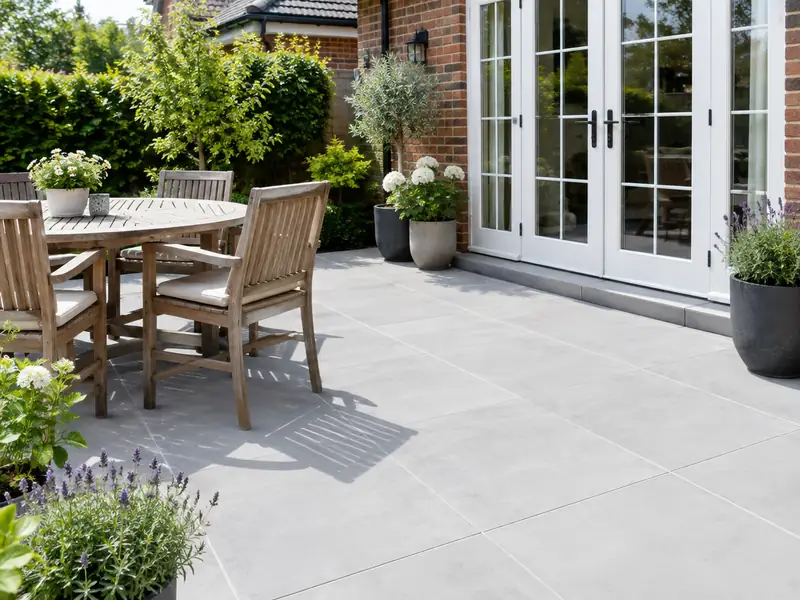
A patio is a paved outdoor area next to the house or in the garden, laid in porcelain, natural stone or concrete slabs on a compacted sub-base and mortar bed, with falls that direct rainwater away from the house.
We offer a new patio throughout Dyfed, from Llanelli, Ammanford, Aberystwyth and Carmarthen to the smaller places in between. Each project starts with a free survey at your home and ends with a written figure, fixed for the work you choose. Because Dyfed is in Wales, we work to the planning system and building standards used there, and guide prices for Wales run at £2,300–£5,100 including VAT.
- Guide price
- £2,300–£5,100 inc VAT
- Time on site
- 3–7 days on site
- Planning rules
- Wales
- Price level
- About 8% below the national guide
- Towns listed
- 4
- Survey
- Free, with a written quote
Patios and paving prices in Dyfed
Budgeting for a new patio in Dyfed? The numbers below include VAT and are adjusted for Wales, where costs are about 8% below the national guide. The headline range is £2,300–£5,100. Nothing is final until we have measured up at a free survey and agreed the specification with you.
| Type of job | What it usually involves | Guide in Dyfed |
|---|---|---|
| Small patio or path | Around 10m² of concrete slabs or a garden path. | £900–£2,300 |
| Typical 20m² patio | Sandstone or porcelain on a full sub-base with jointing and edging. | £2,300–£5,100 |
| Large or multi-level patio | Bigger areas, steps, retaining walls or premium stone. | £5,100–£11,000 |
The main things that change the figure:
- Slab material, size and laying pattern
- Ground levels, slopes, steps and retaining walls
- Drainage needed to keep water away from the house
- Access for materials and removing spoil
Scope of the work
- Survey of levels, damp-proof course, drainage and access
- Excavation and removal of turf, soil or old paving
- Compacted MOT Type 1 sub-base
- Slabs laid on a full mortar bed with falls away from the house
- Primer on porcelain slabs for a strong bond
- Site cleared, waste removed and paving cleaned
Housing across Dyfed
Dyfed covers Carmarthenshire, Ceredigion and Pembrokeshire. Stone cottages and farmhouses under slate roofs are common, often rendered or colour-washed, as in Tenby's brightly painted terraces. Llanelli has Victorian industrial terraces, Aberystwyth and Carmarthen have Georgian and Victorian centres, and bungalows and newer estates surround most towns.
Stone homes often need lime render, repointing and roof slating repairs. Terraces suit loft conversions and extensions, and rural bungalows commonly take extensions, porches and driveways.
Atlantic weather brings strong winds, driving rain and salt to the coast, so exposure ratings matter when specifying render and pointing.
Planning and building rules in Dyfed
The notes below cover Wales, which is where Dyfed sits. Rules change and every property is different, so we speak to the council before pricing your job.
A ground-level patio does not usually need planning permission in Wales; raised platforms are more restricted.
Building Regulations do not normally apply, but levels and drainage must protect the house walls.
Rules change and every property is different, so we check the planning history and constraints for your address before we quote.
The four stages
We look at the job
We begin by looking at the job in person. During the free survey we discuss options, materials and budget for a new patio, and photograph or measure anything the quote needs to reflect.
Your fixed price
Next you receive a written quote with a fixed price for the agreed specification. It lists what is included, what is not, and how payments are staged, so you can compare it properly.
Getting ready
Preparation matters as much as the build. We agree access, parking and working hours with you, order materials in good time, and confirm any permissions so the job isn't held up once it starts.
On site to finish
On site, the agreed plan is followed and any change is put in writing first. At completion we do a final clean, go through the snagging list with you and leave you with the relevant documents.
How we work
Questions about a new patio in Dyfed
What should I do before the work starts?
Before work starts, clear garden furniture, pots and ornaments from the area and agree where materials will be delivered and stored. We need a route for wheelbarrows and, on larger jobs, a small digger, so let us know about side gates, narrow passages or access through the house. Tell us about any known drains, cables or pipes in the area.
What happens at the survey?
We visit your home at a time that suits you, look at the area involved, take measurements and check access, condition and any services that might be affected. We talk through what you want from a new patio, explain the options and answer questions. There is no charge and no obligation; afterwards we send a written quote.
Do I need planning permission in Dyfed?
It depends on the work, the size of the project, your property type and whether the building is listed or in a conservation area. Dyfed is in Wales, so Wales's rules apply. Many smaller jobs need no planning application, but some still need building control approval. We check what applies to your address before quoting.
How do I clean and look after my patio?
Most patios just need regular sweeping and an occasional wash with water and a mild patio cleaner. Porcelain is the easiest to keep clean. Natural stone benefits from a sealant to reduce staining and from prompt cleaning of spills like oil or wine. Re-point any joints that crack or wash out. Avoid high-pressure jet washing close to joints, which can damage them.
How much does a new patio cost?
A typical 20m² patio in sandstone or porcelain costs £2,300–£5,100, including excavation, sub-base, laying and jointing. As a guide, allow roughly £100–£220 per square metre plus fixed costs for set-up and waste. Concrete slabs cost less, while slate, granite and large-format porcelain cost more. Steps, walls and drainage add to the total. We confirm a fixed price after the survey.
Towns in Dyfed
Our coverage for a new patio in Dyfed includes the towns listed here. Each page explains guide costs, typical timings and the neighbouring places we also serve.