
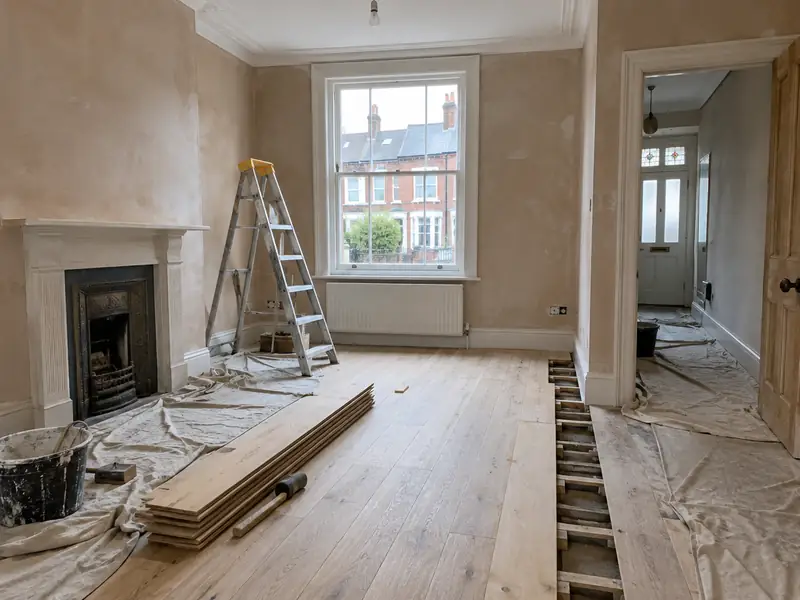
A whole-house renovation is a planned refurbishment of an entire home, typically combining rewiring, heating, plastering, new kitchen and bathroom, flooring and decoration, and sometimes layout changes, carried out in a logical order under one project.
For a homeowner in Hereford, planning a whole-house renovation tends to begin with two questions: what will it cost, and how disruptive will it be? Our guide range is £44,000–£118,000 including VAT, and a typical job runs to 8–24 weeks on site, depending on scope. Both numbers firm up once we have seen the property, measured up and agreed exactly what is included.
- Guide price
- £44,000–£118,000 inc VAT
- Time on site
- 8–24 weeks on site, depending on scope
- Postcodes
- HR1
- Planning rules
- England
- Local area
- Herefordshire
- Survey
- Free, with a written quote
How much does a whole-house renovation cost in Hereford?
Below is a breakdown of typical costs for a whole-house renovation in Hereford. Because rates in the West Midlands are about 2% below the national guide, the overall guide comes to £44,000–£118,000, including VAT. Size, materials and access move the figure, and a free-of-charge survey settles it.
| Type of job | What it usually involves | Guide in Hereford |
|---|---|---|
| Light refurbishment | Decoration, flooring, minor repairs and perhaps one new kitchen or bathroom. | £14,500–£44,000 |
| Full refurbishment | Rewire, heating, plastering, new kitchen and bathroom, flooring and decoration throughout a 3-bed house. | £44,000–£118,000 |
| Renovation with structural changes | A full refurbishment plus wall removal, layout changes or extra bathrooms. | £98,000–£176,000 |
What moves the price up or down:
- Size of the house and number of rooms being renovated
- Whether rewiring, new heating and full replastering are needed
- Kitchen and bathroom specification
- Hidden problems such as damp, rot or outdated drainage
What’s included?
- Room-by-room survey and a planned order of works
- Heating and plumbing upgrades by qualified engineers
- Plastering, skimming and repairs to ceilings and walls
- New kitchen and bathroom fitted to your chosen specification
- Flooring, internal doors, skirting and joinery
- Decoration and a final clean before handover
Building in Hereford
Herefordshire is known for black-and-white timber-framed buildings, especially in villages around Weobley, Pembridge and Eardisland. Old Red Sandstone is used widely in churches, farmhouses and walls, Hereford has Victorian terraces and interwar suburbs, and market towns such as Leominster, Ledbury and Ross-on-Wye mix historic centres with newer estates.
Timber-framed and sandstone properties often need lime plaster, breathable finishes and careful roof repairs. Town terraces suit loft conversions and rear extensions, and rural homes commonly add porches, driveways and fencing.
Whatever era your Hereford home dates from, we plan a whole-house renovation around how it is actually built rather than a one-size-fits-all specification.
Permissions for a whole-house renovation in Hereford
Homes in Hereford come under the regulations for England, summarised below. We don't rely on general rules alone: we confirm the position for your address with the council before a quote goes out.
Internal work such as a new kitchen, bathroom, flooring, plastering or decorating does not need planning permission in England, unless the house is listed, when listed building consent may be needed even for internal changes.
Some internal work is covered by Building Regulations: new electrical circuits and work in bathrooms (Part P), new drainage, structural changes, extractor ventilation and any new window. Notifiable work is certified by a registered installer or by building control.
Rules change and every property is different, so we check the planning history and constraints for your address before we quote.
How does the job run?
A visit to your home
First, someone visits your home in Hereford to see the space, take measurements and note anything that could affect the work, such as access or the condition of what is there. There is no charge for this visit.
Your fixed price
You get the price in writing, itemised so you can see where the money goes. As long as the specification stays the same, that is the price you pay for a whole-house renovation.
Plan and prepare
Next comes planning the work itself. We set a start date that suits you, line up the right trades, and make sure any approvals for a whole-house renovation are in place before the first day on site.
On site to finish
During the work we protect the areas around it and tidy up at the end of each day. Once complete, we check the finish, remove our materials and hand over paperwork such as building control sign-off where it applies.
Why homeowners choose us
Frequently asked questions
What contingency should I allow?
A contingency is money set aside for problems found once work starts, such as rotten joists, hidden damp or wiring that is worse than expected. For older houses, setting aside at least 10–15% of the build cost is sensible. We look for warning signs during the survey and price known issues upfront. If something unexpected is found, we explain it and price it before carrying on.
Who do I deal with during the job?
One point of contact manages your project from survey to handover. They schedule the trades working under our contract, keep you updated on progress, and are the person to call with any question. You don't need to coordinate builders, electricians or decorators separately, because that is part of what we do.
Is the price fixed?
Yes, for the specification we agree. Your written quote sets out exactly what is included at a fixed price. It only changes if you ask for something different, or if a problem the survey could not reasonably reveal later needs extra work. In either case we explain the change and confirm it in writing before going ahead.
How much does it cost to renovate a whole house?
A full refurbishment of a typical 3-bed house costs £44,000–£118,000, covering rewiring, heating, plastering, a new kitchen and bathroom, flooring and decoration. A light refresh costs much less, while renovations with structural changes cost more. The biggest variables are the condition of the house and the kitchen and bathroom specification. We survey every room and give you a written price for the agreed scope.
In what order should renovation work be done?
A renovation should follow a set order so finished work is never damaged by later trades. It usually runs from roof and structural repairs, through strip-out, first-fix electrics and plumbing, then plastering, second-fix electrics and plumbing, kitchen and bathroom fitting, flooring and finally decoration. Windows are usually fitted before plastering. We plan the programme around this sequence so each trade follows on smoothly.
Nearby towns
Homes across HR1 in Hereford are within our coverage, as are those in Ross-on-Wye, Leominster and Ledbury. If you are just outside these areas, ask anyway, because we work right across the UK.