
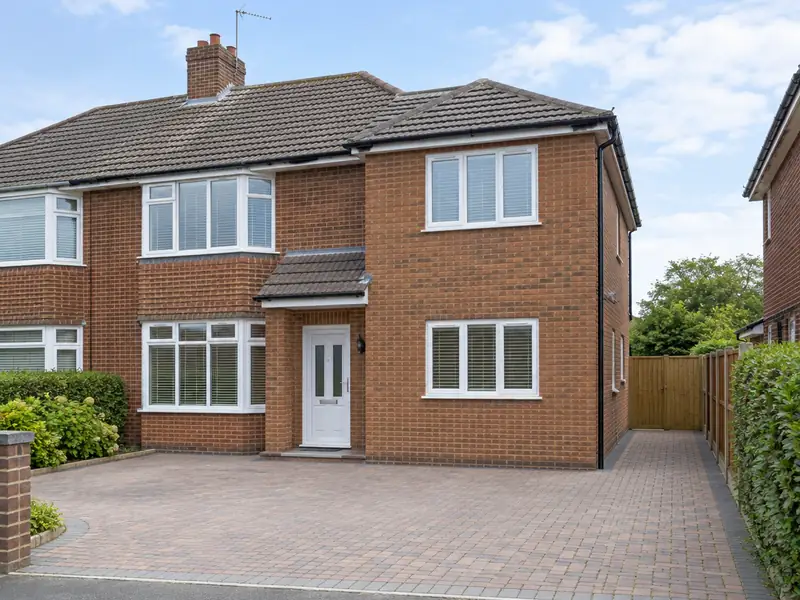
A double-storey extension adds two floors of new space to your house in one build, typically a larger kitchen or living room downstairs with an extra bedroom, bathroom or en-suite above, sharing one set of foundations and one roof.
From a first conversation about a double-storey extension to the day the site is cleared, homeowners in Rhondda deal with us directly. We come out to measure up at no cost, explain the choices in plain terms and send a written quote. For context, comparable work in Wales usually falls within £55,000–£110,000 including VAT, and it is available across CF41 and CF43.
- Guide price
- £55,000–£110,000 inc VAT
- Time on site
- 14–22 weeks on site
- Postcodes
- CF41 and CF43
- Planning rules
- Wales
- Local area
- Rhondda Cynon Taff
- Survey
- Free, with a written quote
Double-storey extensions prices in Rhondda
Budgeting for a double-storey extension in Rhondda? The numbers below include VAT and are adjusted for Wales, where costs are about 8% below the national guide. The headline range is £55,000–£110,000. Nothing is final until we have measured up at a free survey and agreed the specification with you.
| Type of job | What it usually involves | Guide in Rhondda |
|---|---|---|
| Small (15–20m² total) | A compact rear or side extension adding a small room on each floor. | £37,000–£60,000 |
| Typical (30–40m² total) | A larger kitchen or living room below with a double bedroom or en-suite above. | £55,000–£110,000 |
| Large (50m² plus total) | Wide or deep extensions, often with a new bathroom, steelwork and high-spec glazing. | £92,000–£166,000 |
Your price depends mostly on:
- Combined floor area across both storeys
- How the new roof joins the existing roof
- Foundation depth, ground conditions and drains to divert
- Scaffolding duration, access and the level of finishes
Scope of the work
- Groundworks, foundations and below-ground drainage
- Insulated cavity walls with brick or render to match the house
- First-floor joists, stud walls and new openings upstairs
- Electrics, plumbing and heating by qualified trades, with certificates
- Windows, external doors, plastering and internal doors
- Building control inspections and completion certificate
Homes in Mid Glamorgan
The Rhondda, Cynon and Merthyr valleys are lined with stone terraces built for mining families, stepped along steep hillsides. Pontypridd, Caerphilly and Merthyr Tydfil have Victorian centres, and Bridgend has grown with large modern estates alongside interwar and post-war housing.
Valley terraces commonly need repointing, roof repairs, rendering and window replacement, and loft conversions can add useful space. Newer estate homes often take garage conversions, porches and landscaping.
These patterns matter for a double-storey extension: older walls, roofs and floors in Rhondda can need different materials or extra preparation compared with newer homes.
Do you need permission in Rhondda?
Rhondda is in Wales, so the planning and building rules set out below are the ones that apply. We confirm the details with the council before we quote.
In Wales, two-storey extensions are tightly limited under permitted development, including distance to the rear boundary, so most need planning permission.
Building Regulations approval is needed in Wales, and the Party Wall etc. Act 1996 applies to work on or near shared walls.
Rules change and every property is different, so we check the planning history and constraints for your address before we quote.
The four stages
We look at the job
It starts with a survey at the property, free of charge. We check condition, access and services, ask how you want the finished result to look, and answer any questions you have about a double-storey extension.
Written quote
You get the price in writing, itemised so you can see where the money goes. As long as the specification stays the same, that is the price you pay for a double-storey extension.
Booking the work
Next comes planning the work itself. We set a start date that suits you, line up the right trades, and make sure any approvals for a double-storey extension are in place before the first day on site.
Finish and handover
During the work we protect the areas around it and tidy up at the end of each day. Once complete, we check the finish, remove our materials and hand over paperwork such as building control sign-off where it applies.
What you can expect from us
Questions about a double-storey extension in Rhondda
Can we live at home while it is built?
Most families stay at home during a double-storey extension. The new structure is built outside first, and we only break through into the existing rooms near the end, usually one floor at a time. Upstairs, this may mean a bedroom is out of use for a week or two. We fit dust screens, protect floors and stairs, and plan any time without water or power in advance.
Is the price fixed?
Yes, for the specification we agree. Your written quote sets out exactly what is included at a fixed price. It only changes if you ask for something different, or if a problem the survey could not reasonably reveal later needs extra work. In either case we explain the change and confirm it in writing before going ahead.
Do you cover Tonypandy, Aberdare and Pontypridd?
Yes. As well as Rhondda, we cover Tonypandy, Aberdare and Pontypridd and the rest of Mid Glamorgan. Our coverage is UK-wide, so the process is the same wherever you are: a free site survey, a quote in writing that fixes the price for the agreed scope, and one point of contact while the work is planned and carried out.
Can the new upstairs room have its own bathroom?
A new upstairs room can usually have an en-suite, provided waste pipes can reach the soil stack or a new one can be installed. Running the waste pipe to the right falls is the main design question, and a pumped system is an option where gravity will not work. We plan bathroom positions at the design stage so pipes, ventilation and insulation are built in rather than added later.
How is the new roof joined to the existing house?
The new roof is usually tied into the existing roof so the two read as one. On a rear extension this often means a lower ridge or a hipped end, with valleys where the slopes meet. We strip back some existing tiles, fix new rafters and battens, and lay matching tiles or slates. Lead or proprietary flashings seal the junctions so water runs off properly.
Nearby towns
We cover every part of Rhondda, including CF41 and CF43, and nearby Tonypandy, Aberdare and Pontypridd. Wherever you are within that patch, the survey is free and the quote comes to you in writing.